
.webp)
Disc Recovery Program
You deserve more than being told tojust rest and take painkillers
Disc pain doesn't just hurt — it stops you sleeping, working, moving, and doing the things that make life worth living. If you're tired of managing around it and ready for a real plan, our specialist team is here.
Evidence-based · Exclusively in Berlin · Led by Dr. Matthew Hender DC
Who is this for?
We know how exhausting this has been
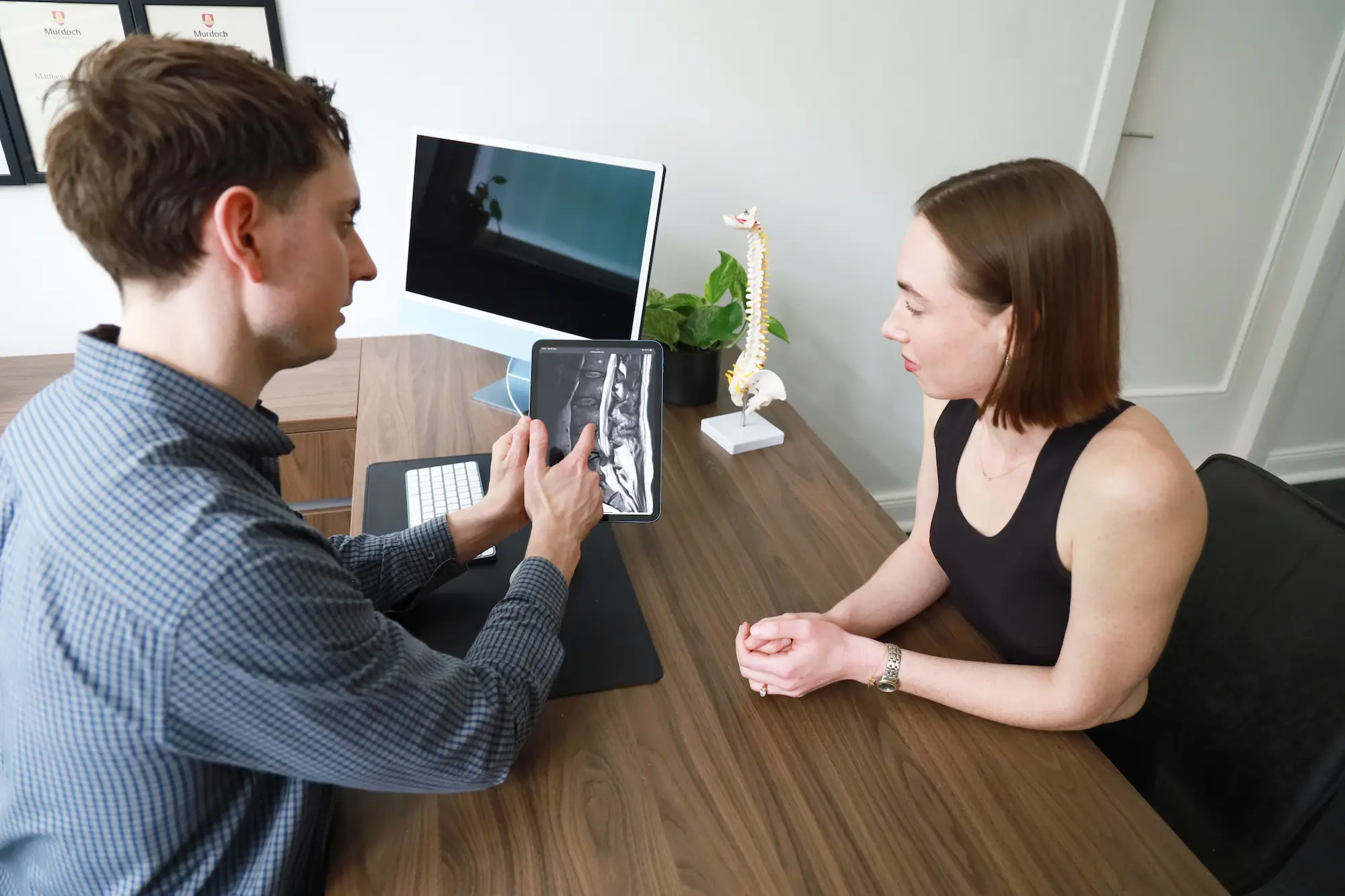
Most of our patients come to us already holding an MRI result. They've seen their GP, been referred, maybe done physio. They've been told their disc "isn't that bad" or to take anti-inflammatories and wait. And yet every morning they wake up and the pain is still there, quietly stealing pieces of their life.
If you've got a diagnosis and you're still searching for what to actually do about it — this programme was built for exactly that moment.
The Programme
Everything we do together, from start to finish
This isn't a one-off appointment. It's a complete 6–8 week programme — each element chosen specifically because disc problems respond best to a consistent, layered approach, not sporadic single treatments.
We review your MRI, go through your history, and build a plan designed around your specific situation. No rushing.
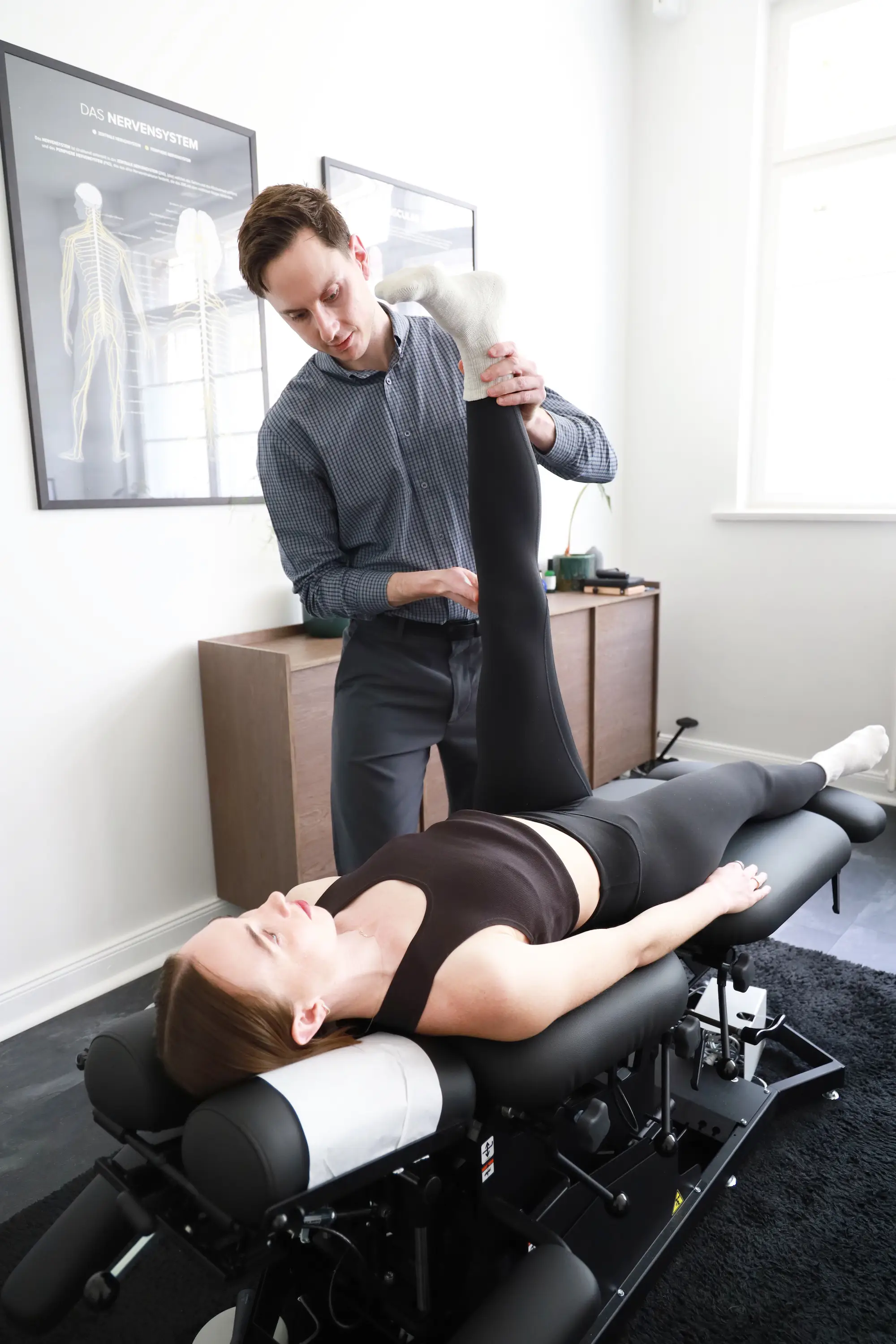
A full assessment of how your body moves and loads — so we understand the whole picture, not just the disc.
Targeted manual therapy to restore movement, reduce tension around the affected disc, and support spinal function.
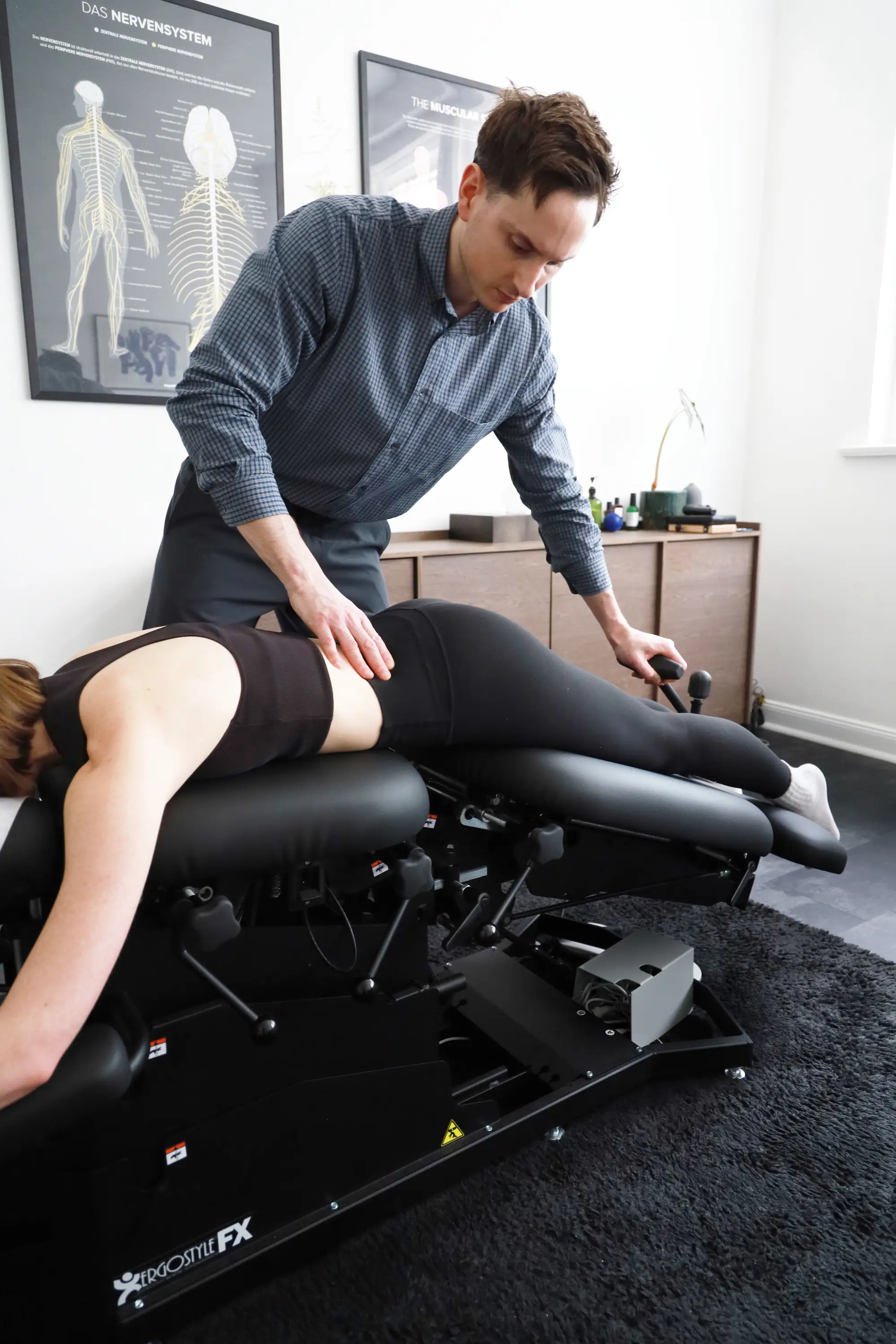
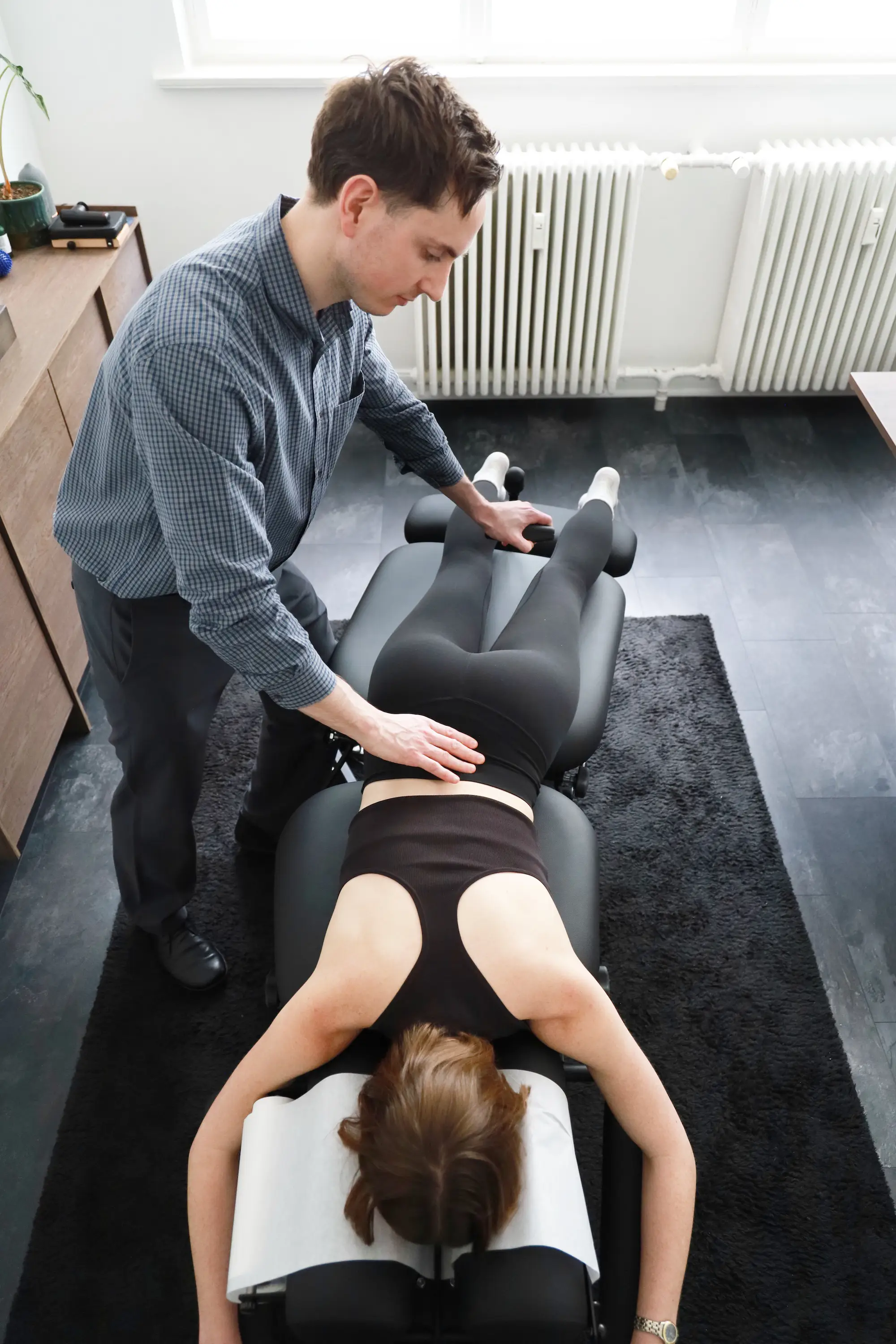
Gentle decompression on our specialist flexion distraction table — working directly with the disc to reduce pressure and support recovery.
Targeted release of the deep muscle tension that builds up around a disc problem helping the body relax and respond better to treatment.
Structured home exercises to keep your progress going between appointments and your Krankenkasse refunds €99 of it back to you.
Understanding your condition
What's actually going on in there and why it's not hopeless.
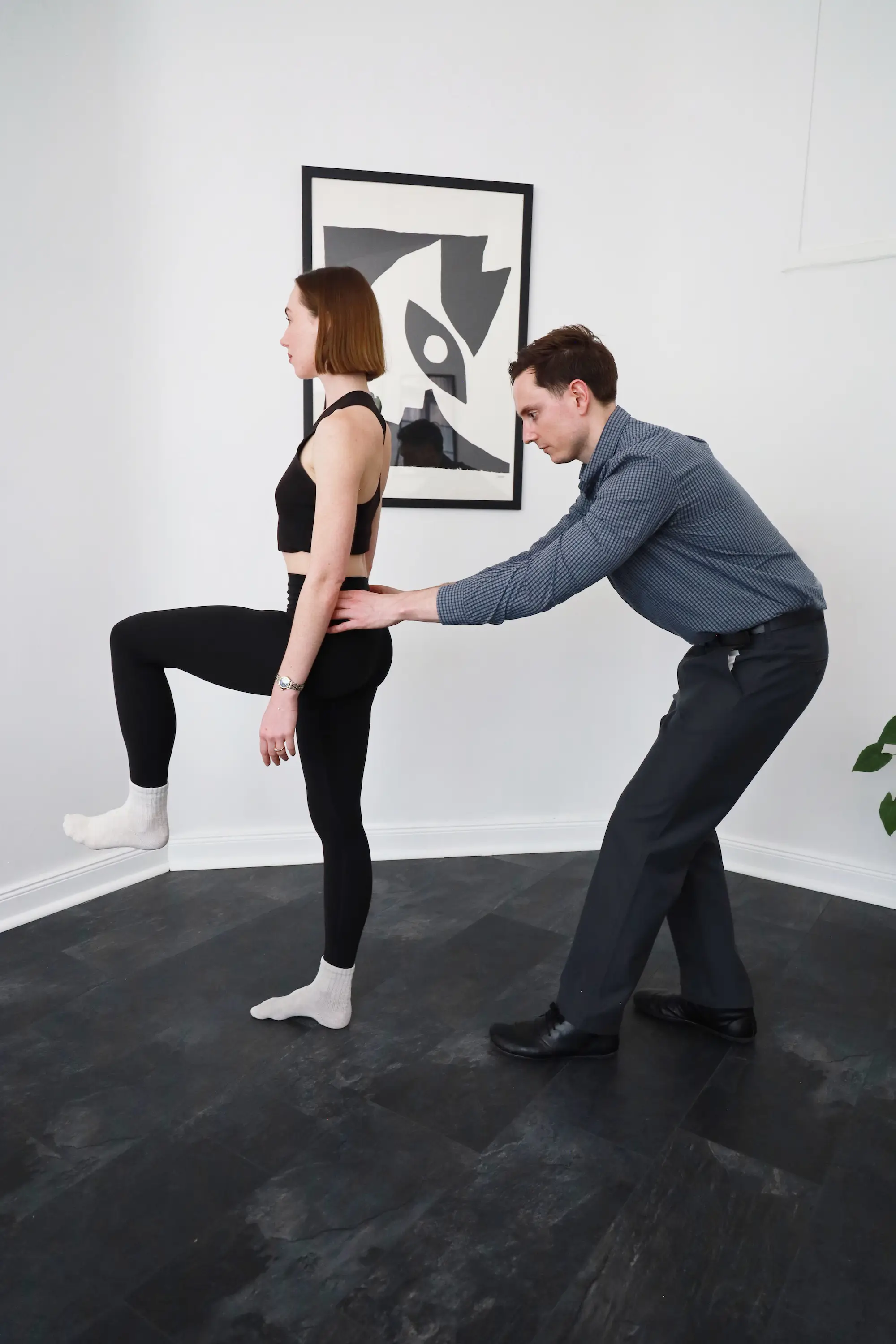
A disc herniation happens when the soft inner core of a spinal disc pushes through its outer layer, sometimes pressing on nearby nerves. It sounds scary and the pain certainly can be. But understanding what's happening is the first step to feeling less at the mercy of it.

Without structured support, disc pain can persist longer than it needs to. Waiting without a plan is not a neutral choice, research shows that early, consistent conservative care leads to significantly better outcomes than a passive approach.

Research consistently shows that manual therapy combined with structured exercise produces significantly better outcomes than either alone. And the best part, with the Rücken Reset course, you have the tools to keep making progress at home, between every appointment.
The good news
Research shows that the majority of disc herniations improve without surgery — especially when the right conservative care is applied consistently. The body has a remarkable capacity to adapt and recover when it's given the right support.
That's what this programme is built around. Not a promise of a specific outcome — but a committed, structured effort to give your body the best possible conditions to do what it's designed to do.
Nach einer Bandscheibendiagnose — drei Wege
- No structured plan
- Pain can persist for months
- Muscles weaken around the disc
- Risk of chronic pain patterns forming
- No support for daily life
- Personalised plan from day one
- Directly targets the affected disc
- Supports natural recovery process
- Non-invasive, no recovery time
- Home support included
- Invasive procedure with risks
- Weeks of post-op recovery
- Not always a permanent solution
- Guidelines recommend conservative care first
- Irreversible
The four stages of disc herniation
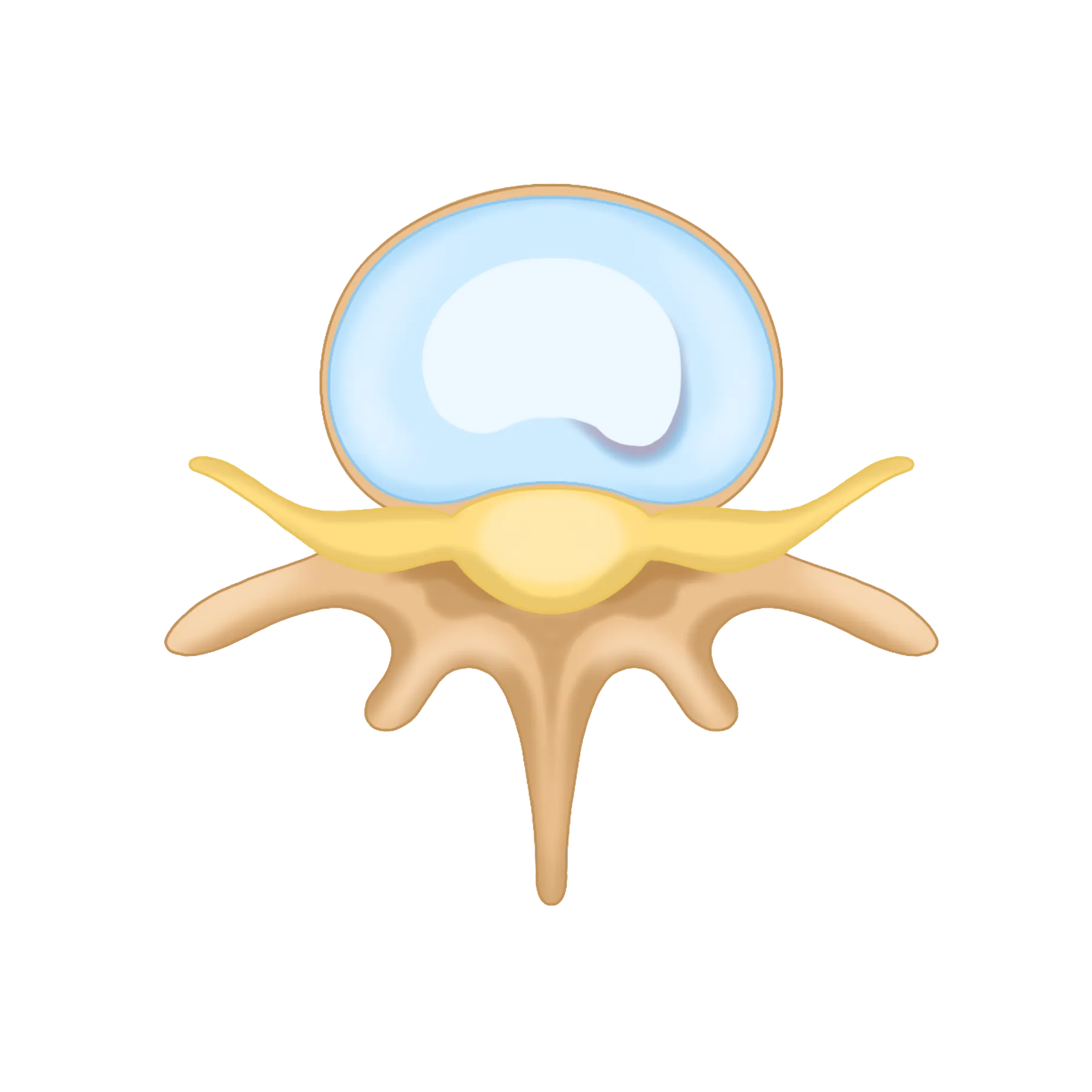

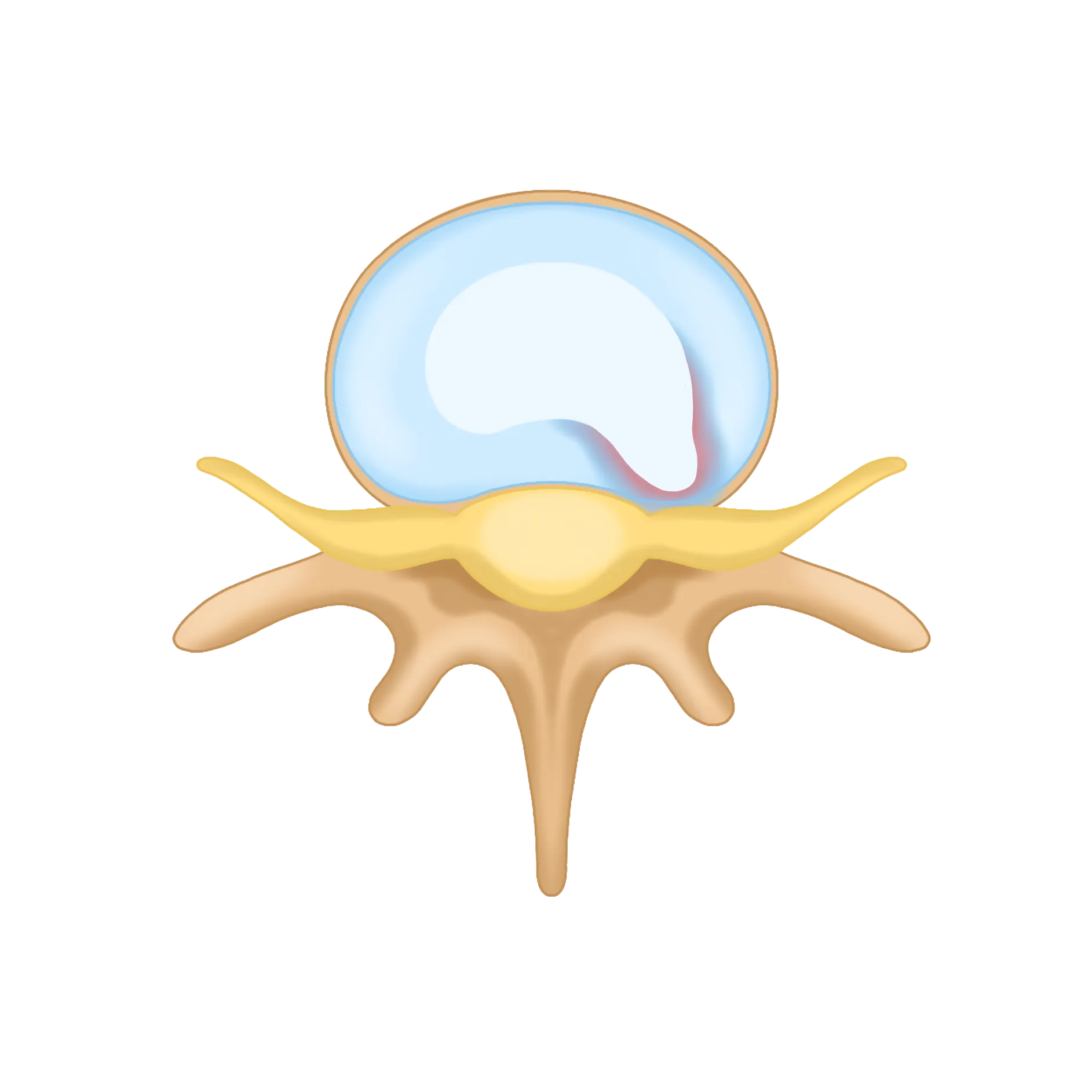
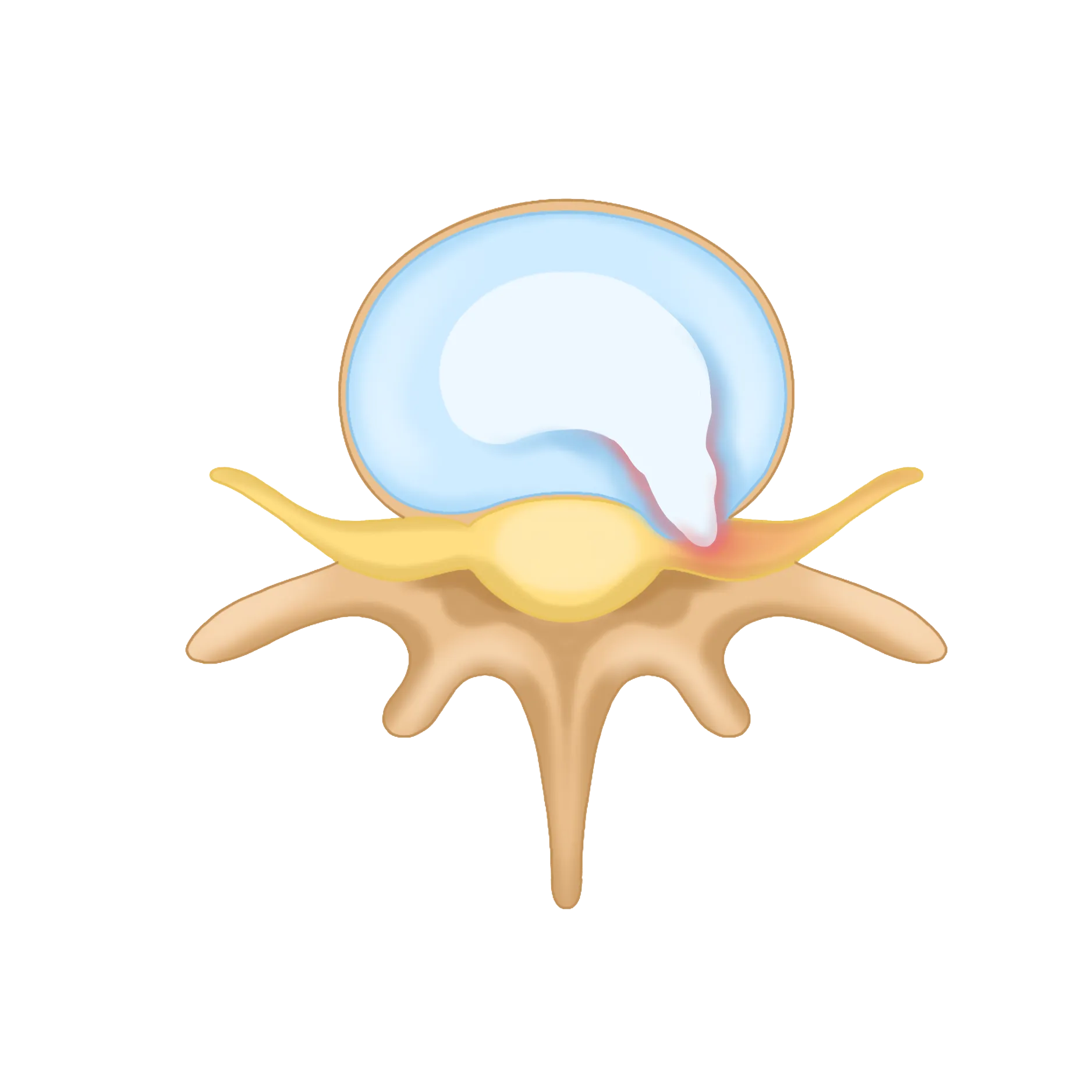
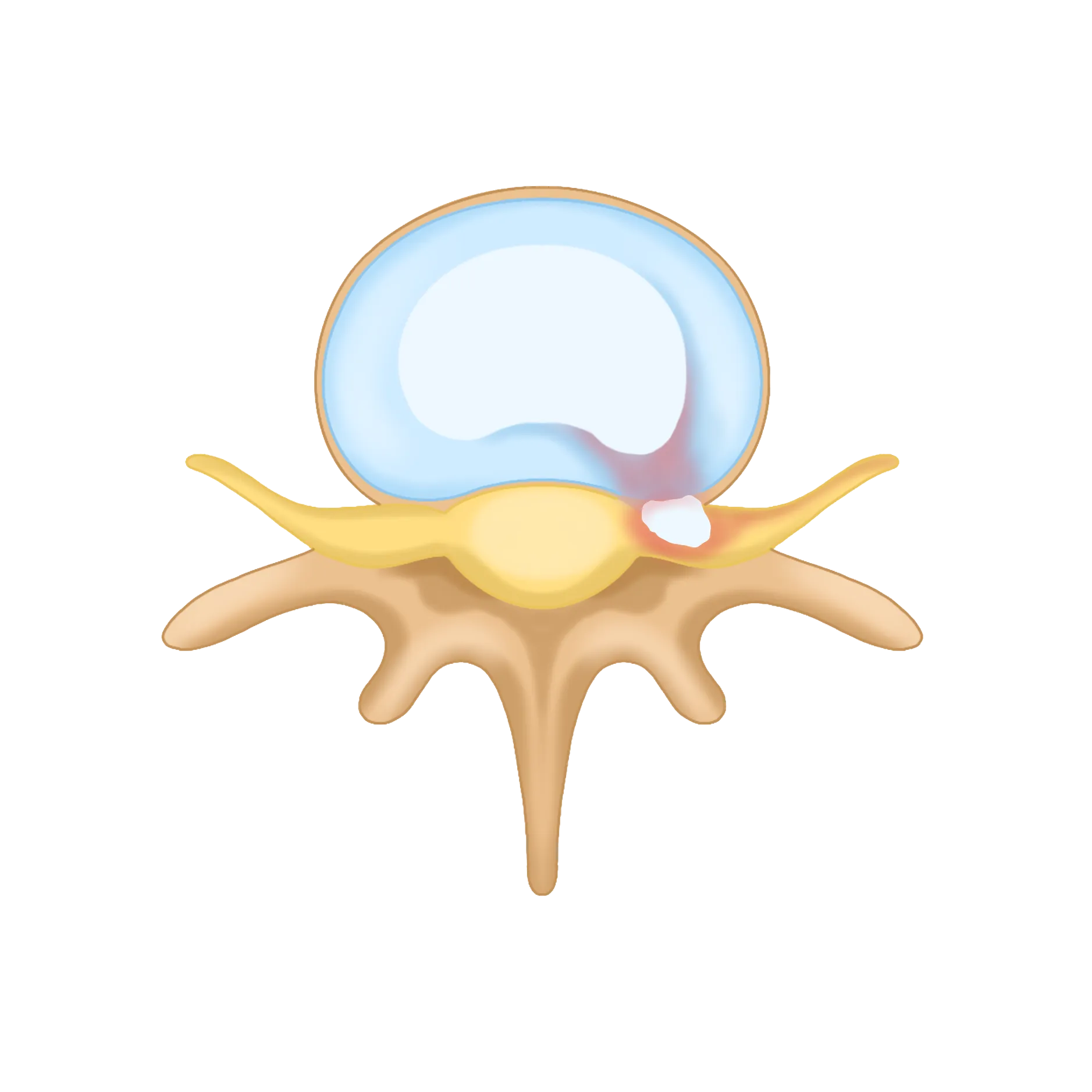
Stages 1–3 are typically well suited to structured conservative care.
Stage 4 is assessed individually, we are always honest about what we can and cannot help with.
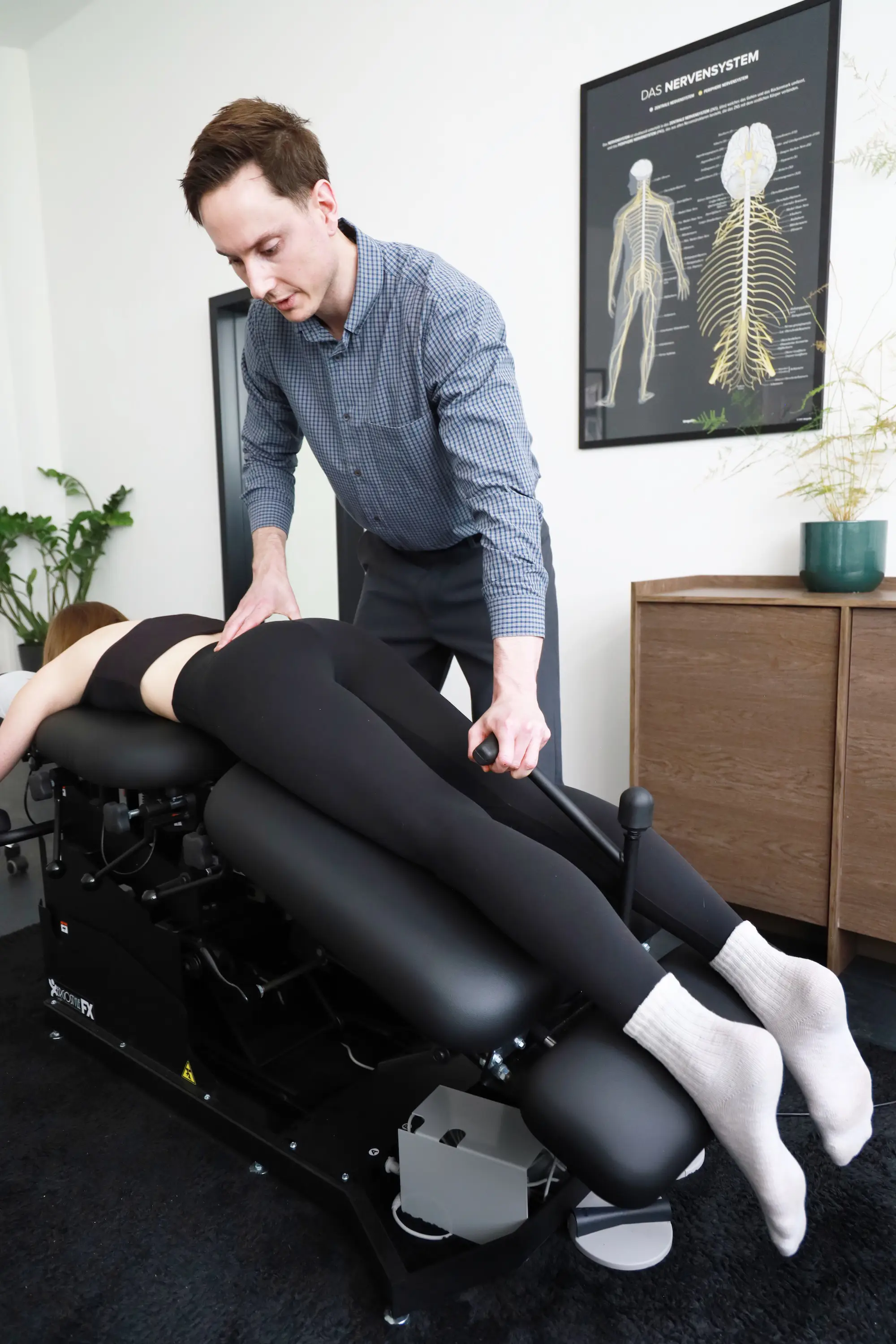
Spinal Decompression Therapy
What makes it so different?
Research shows that flexion distraction therapy reduces intradiscal pressure more effectively than other manual therapy techniques. Gentle, non-invasive and exclusively available as part of the Disc Recovery Programme at aboutchiro.
Are you suitable?
Find out if the programme is right for you
Answer 6 quick questions and we'll give you an honest assessment of whether the Disc Recovery Programme fits your situation.
Investment
One clear price. Everything included.
We know that chronic pain is already expensive — in time, energy, and the things you've had to give up. We've put everything into one transparent package so there are no surprises, and no deciding which parts of your care you can afford.
+ Rücken Reset Kurs (€99)
The included Rücken Reset Kurs is ZPP certified — your German statutory health insurance (Krankenkasse) will refund you €99 after course completion. Simply submit your certificate. Most insurers process this within days.
WHY ABOUTCHIRO
We built this programme because single treatments weren't enough

ZPP certified course
The Rücken Reset course is officially recognised — which means your Krankenkasse takes it seriously too, and will refund you €99 after completion.

A table built for disc problems
The flexion distraction table isn't a gimmick — it's a medical-grade tool specifically designed to gently decompress the spine and support disc recovery.

A real plan, not just appointments
We know where you're starting, and we know where we're trying to get you. Every session has a purpose within the bigger picture of your recovery.

Recovery continues at home
What you do between appointments matters just as much. The online course keeps your progress going when you're not in the practice.
German & English

ZPP zertifiziert — Zentrale Prüfstelle Prävention
The Rücken Reset course is officially certified — accepted by all German statutory health insurers for reimbursement.
Why aboutchiro?
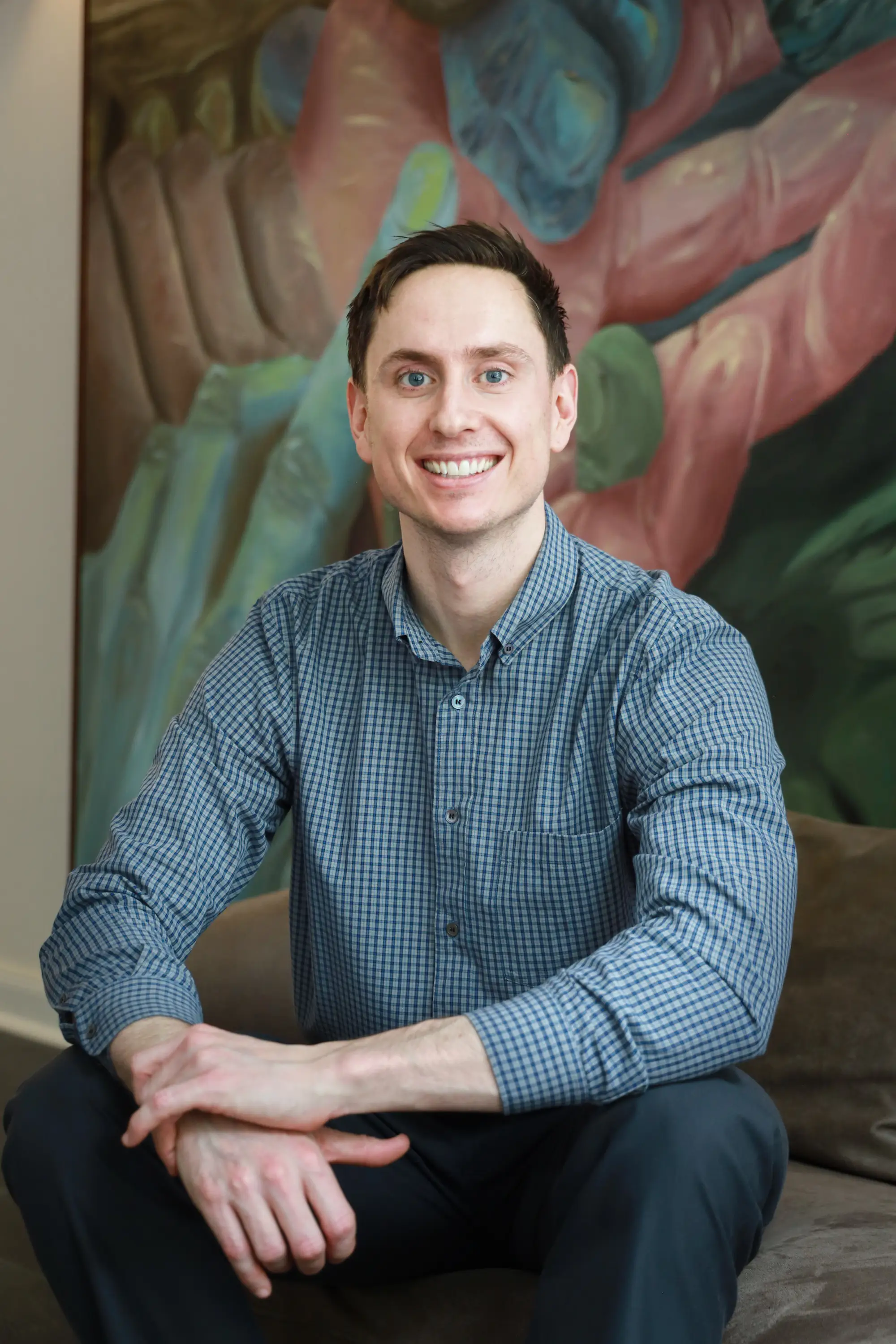
Matthew Hender
Doctor of Chiropractic
I hold a doctoral-level qualification in chiropractic from Murdoch University, Australia — with 7 years of clinical experience focused on disc and spinal rehabilitation. Disc problems are what I do.
"I built the Disc Recovery Programme because I kept seeing the same story — patients arriving with an MRI, a diagnosis, and no real plan. They'd been told to rest, take medication, and wait. I wanted to offer something genuinely different: a structured, evidence-based programme that takes disc problems seriously and gives the body the best possible conditions to recover."
Frequently Asked Questions
Ein Bandscheibenvorfall entsteht, wenn das weiche innere Material einer Bandscheibe durch einen Riss in der äusseren Schicht austritt. Dies kann häufig plötzliche, stechende Schmerzen verursachen und manchmal auf einen nahegelegenen Nerv drücken.
Bandscheibendegeneration ist ein langsamerer Prozess, bei dem die Bandscheibe im Laufe der Zeit allmählich an Höhe, Flüssigkeit und Flexibilität verliert. Dies führt meist eher zu einem dumpferen, anhaltenden Schmerz.
Beide Beschwerden können schmerzhaft sein und beide sprechen gut auf eine strukturierte konservative Behandlung an, wobei der Behandlungsansatz jeweils individuell angepasst wird. Viele Menschen haben tatsächlich Elemente beider Beschwerden gleichzeitig.
Research suggests that many disc herniations do improve over time — the body has a natural process of reabsorbing disc material that is pressing on nerves. However, "healing on its own" rarely means doing nothing. Without structured support, the muscles around the spine weaken, movement patterns deteriorate, and the pain often becomes chronic rather than resolving. Structured conservative care — like the programme we offer — gives the body the best possible conditions to go through that natural recovery process, significantly faster and more completely than simply waiting.
This varies considerably depending on the severity of the herniation, which disc is affected, and — crucially — whether the person receives structured care or not. Without treatment, disc pain can persist for many months and in some cases becomes chronic. With structured conservative care, many patients begin to notice meaningful improvement within the first few weeks. Our programme runs over 6–8 weeks, which aligns with the timeframe most evidence suggests is needed for significant progress with a structured approach.
Yes — when delivered by qualified chiropractors who have assessed your specific situation, chiropractic care is considered safe and effective for disc herniation. At aboutchiro, we always review your MRI and full history before beginning any treatment. Not every technique is appropriate for every disc problem, and we adapt our approach accordingly. If we ever feel your situation requires a different type of care or specialist input, we will tell you honestly — we do not treat people we cannot help.
Prolonged sitting is one of the most common aggravating factors — it increases pressure on the discs significantly. Bending forward, lifting with a rounded back, sneezing, coughing, and certain twisting movements can also flare symptoms. Poor posture over time, weak core muscles, and high stress levels all contribute to keeping disc pain going. This is why our programme includes a posture analysis and the Rücken Reset home course — because what you do between appointments, and in daily life, matters just as much as the treatment itself.
Spinal decompression therapy is a gentle, non-invasive treatment delivered on a specialist flexion distraction table. The table moves in a controlled way that creates a gentle traction and flexion effect on the spine — reducing pressure within the affected disc, encouraging the retraction of herniated material, and improving the flow of nutrients to the disc. It is particularly well suited to disc herniation, degeneration, and sciatica. At aboutchiro, this treatment is available exclusively as part of the Disc Recovery Programme — it works best as one element of a coordinated treatment plan, not in isolation.
Both chiropractic care and physiotherapy have value — and they are not mutually exclusive. Physiotherapy tends to focus more on exercise rehabilitation and movement retraining. Chiropractic focuses on restoring spinal function, joint mobility, and nerve health through manual therapy. For disc herniation specifically, the combination of chiropractic adjustments and spinal decompression therapy targets the disc directly in a way that exercise-based physiotherapy alone cannot. Many patients come to us after physiotherapy that helped partially but did not fully resolve their symptoms — and find that the direct approach makes a significant difference.
Standard chiropractic treatment is generally not covered by German statutory health insurance (gesetzliche Krankenkasse). However, the Rücken Reset online course included in our programme is ZPP-certified, which means your Krankenkasse will reimburse €99 of the programme cost after you submit your certificate of completion — reducing your effective out-of-pocket cost significantly. Some private health insurance plans (private Krankenversicherung) do cover chiropractic — we recommend checking your policy directly. We are happy to provide you with all the documentation you need to submit a claim.
Honestly — no, and we'd be concerned about anyone who promised you otherwise. Every disc problem is different, every body responds differently, and anyone offering guarantees in healthcare isn't being straight with you. What we can tell you is that we only offer this programme to people we genuinely believe it can help. If we don't think you're a good fit, we'll tell you at your first appointment — and we won't take your money. What most of our patients experience is a meaningful improvement in how they feel and how they move. But we'd rather you come in with realistic expectations and be pleasantly surprised than arrive with promises we can't keep.
Yes — and honestly, that's how most of our patients arrive. Physiotherapy is valuable but it doesn't always address the disc directly. The combination of chiropractic care, spinal decompression, and structured home support is a genuinely different approach. We'll tell you honestly at your first appointment whether we think this programme is the right fit for your situation.
After completing the Rücken Reset course, you'll receive a ZPP-certified certificate of completion. Simply submit this to your Krankenkasse — most statutory insurers process the refund quickly and without complications. We'll walk you through it.
Not at this stage — and that's intentional. The decompression therapy works best as part of a coordinated plan, not in isolation. It's one piece of a bigger picture, and pulling it out on its own wouldn't serve you as well.
Typically 6–8 weeks, spread around your schedule. We'll plan the timing together at your first appointment based on what works for your life — not just what works for ours.
No referral needed. Just book your initial consultation and we'll take it from there. If we feel your situation needs input from another specialist, we'll tell you that too — we're always honest about what we can and can't help with.
Absolutely — aboutchiro is an international practice and we see patients in both English and German every day. You'll never have to struggle through an appointment in a language that isn't yours.